01
Measured, not estimated
Performance figures we publish come from instruments on real hardware, with the conditions recorded.
T · [CLIENT TO PROVIDE] E · [CLIENT TO PROVIDE]
Who we are
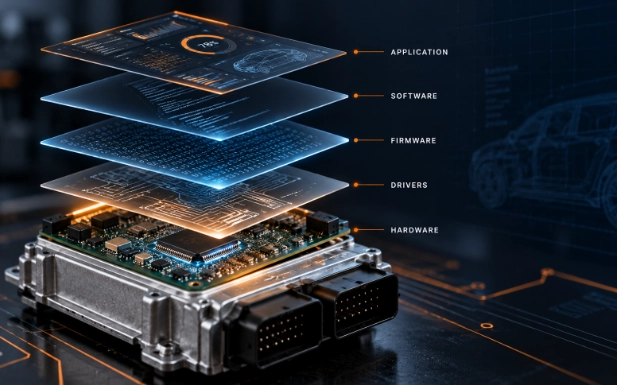
Mahi Electronics designs electronic products. That means circuits, boards, embedded platforms, firmware and the connectivity between them — engineered as one system rather than as separate contracts handed between suppliers.
The distinction matters because most product failures do not happen inside a discipline. They happen at the joins: a timing assumption the firmware made about hardware, a component choice nobody checked for availability, a test that was never designed to be possible on the production line.
We hold those joins ourselves. One team is accountable for the product behaving as specified, which is a different commitment from each supplier confirming their part met its own brief.
Engineering principles
Position
What we are
What we are not
Integration
The boundary between hardware and software is where most product programmes lose time. A register behaves differently from the datasheet. A power rail collapses under a firmware state nobody modelled. A timing margin that looked generous on paper disappears at temperature.
When the same team owns both sides, those discoveries happen during bring-up instead of during validation, and they are fixed in whichever layer is cheapest to change rather than whichever layer has a supplier willing to absorb it.
Continuity
The same people carry the requirement from the first conversation to the first production build, so nothing is re-learned at each stage.
What the product must do, survive and prove — written down before architecture.
Hardware, embedded and connectivity decisions taken together as one structure.
Schematics, layout and software structure developed against that architecture.
Prototypes built and measured so assumptions become recorded facts.
Functional, integration and reliability testing against the original requirements.
Design data, source, test procedures and build packs transferred to you.
Standards of evidence
Credibility is easier to protect than to repair, so this site states only what can be shown.
01
Performance figures we publish come from instruments on real hardware, with the conditions recorded.
02
Client names, logos and project details appear only where the client has approved them in writing.
03
We describe engineering we perform. Production volume and factory capacity are not ours to claim.
04
Standards and accreditations are listed only once certificates are in place and current.
05
Where we support rather than perform an activity, the site says support.
06
Facts awaiting confirmation are marked, not invented to fill a layout.
Next step
Tell us what the product has to do. We will tell you what engineering it needs, which disciplines are involved and what evidence you should expect at each stage.